
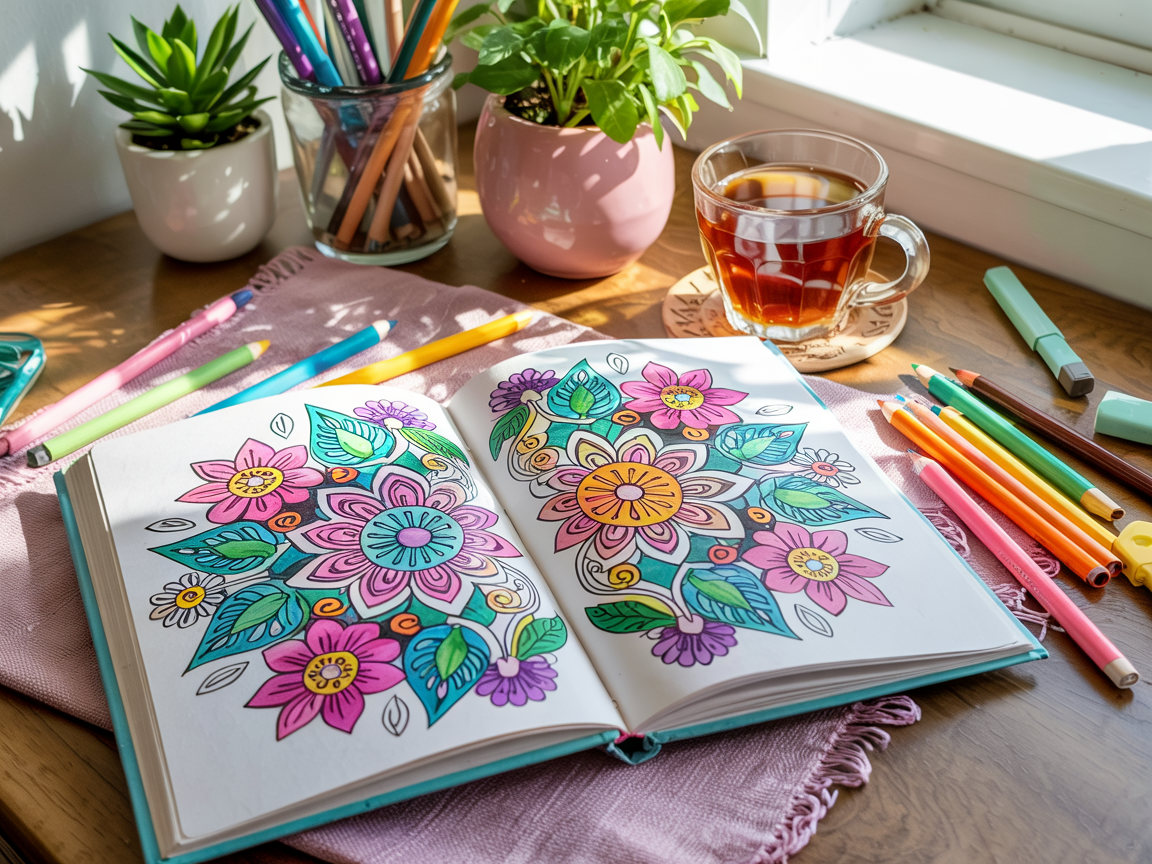
Coloring isn’t just a childhood pastime — it’s a science-backed way to reduce anxiety and feel calmer. With just a few colored pencils and a quiet moment, you can ease your mind and improve your mental well-being. In this extended guide, we dive deep into how and why coloring works to soothe your brain, backed by studies and expert tips.
1. The Brain on Coloring: Why It Works
Coloring involves repetitive, rhythmic motion and gentle concentration, which helps quiet the amygdala — the part of your brain responsible for the fight-or-flight response. According to the Mayo Clinic, this shift in brain activity promotes relaxation, reduces anxiety, and improves sleep quality.
This activity also encourages the brain to enter a «flow» state, where time seems to disappear, and the mind fully immerses in the moment. This state is known to improve mood and reduce negative thoughts.
You can read the full Mayo Clinic article here:
https://www.mayoclinichealthsystem.org/hometown-health/speaking-of-health/coloring-is-good-for-your-health
2. Coloring as a Mindfulness Practice
Mindfulness is about staying present, and coloring is an ideal gateway to this practice. As you color, your focus shifts from worries to the act of coloring itself. The selection of colors, the movement of your hand, and the shapes on the page bring you into the now.
Unlike meditation, which many find difficult, coloring offers a more approachable entry into mindfulness. You can start right away with our
👉 Mindfulness Coloring Pages
3. What the Research Says
In a study published by Curry and Kasser (2005), participants who colored mandalas reported significantly lower levels of anxiety than those who doodled freely. Structured patterns seem to help the mind relax and engage without stress.
Even short sessions of coloring (20–30 minutes) can trigger a measurable physiological response: lowered heart rate and reduced cortisol levels.
👉 Link to the study
4. Choosing the Right Pages and Tools
To get the most out of coloring for anxiety, choose designs that feel soothing to you. Mandalas, geometric patterns, and nature scenes tend to promote the greatest sense of calm. Soft colored pencils or pastel markers are excellent tools to enhance the experience.
Browse our 👉 Free Coloring Pages
Or explore 👉 Positive Affirmations Coloring for uplifting quotes to color.
5. How to Build Coloring into Your Daily Routine
Consistency is key. Here are easy ways to include coloring in your daily life:
- 🌞 Morning: 10 minutes of coloring before checking your phone
- ☕ Afternoon: A short coloring break with a cup of tea
- 🌙 Night: Wind down with soft music and a peaceful coloring page
Even small sessions can become anchors of peace in a busy day.
🖍️ Final Thoughts
Coloring is more than art — it’s a wellness practice grounded in science. From relaxing your nervous system to helping you reconnect with the present, it offers a gentle, creative path to anxiety relief.
🎨 Want to explore more?
- 👉 Download free PDF coloring pages
- 👉 Read more on the Coloring Tips & Ideas Blog
- 👉 Try our Mindfulness Coloring Collection